
2026

Prof. Dorothy Laubscher
Technology, pedagogy and open education: Future possibilities for self-directed learning...read more
Prof. Dorothy Laubscher
Technology, pedagogy and open education: Future possibilities for self-directed learning...
This inaugural lecture reflects on four interconnected themes: technology, pedagogy, open education and the future possibilities for self-directed learning (SDL). Drawing on research in higher education, teacher professional development and school mathematics, it examines how pedagogical design, blended learning and cooperative learning can support greater learner responsibility, participation and SDL. Particular attention is given to structured support that develops students’ SDL skills, to meaningful interaction and purposeful learning design.
The lecture also considers how open education contributes to SDL. Open educational resources and open educational practices extend possibilities for access, adaptation, participation, creation and sharing. This positions learners and facilitators as active evaluators, adapters and contributors rather than just consumers of knowledge. These practices require judgement, critical evaluation, reflection and responsibility, all of which are closely aligned with SDL.
The rapid emergence of generative artificial intelligence (AI) introduces both opportunities and challenges. While it may support feedback, exploration, resource adaptation and personalised learning, it also raises concerns about overdependence, accuracy and academic integrity. This raises a more fundamental question: at what point have we moved from supporting learning to replacing the processes in which learning develops? The central issue is therefore not just how generative AI should be integrated into education, but under what conditions its use strengthens rather than undermines SDL.
Using Tetris as a metaphor, the lecture concludes that facilitators cannot anticipate every technological or educational “piece” that will emerge. The more pressing responsibility is to create inclusive and supportive learning environments in which learners develop the agency, judgement and responsibility to evaluate, adapt and continue learning in changing and uncertain contexts.
2025

Prof. Julialet Rens
Moving in, moving through, moving beyond – educational transitions and the values that shape our journey...read more
Prof. Julialet Rens
Moving in, moving through, moving beyond – educational transitions and the values that shape our journey
Although the topic suggests an academic focus, this speech shares my personal story about how a long history of focusing on values has contributed to all the transitions made in my academic career. I applied these transitions to my own life, focusing on the values that guided my career. It also reflects on the projects that emerged from these transitions. These projects aligned with my own research foci, namely cultural diversity, culturally responsive teaching and social justice, which resonate in my teaching as well. “Moving in” reflected on my introduction to academia and my own studies, which expanded to projects that shaped my academic career. “Moving through” focused on my research, which also resonated in my teaching in the Faculty of Education and provided me with wonderful opportunities to work collaboratively with colleagues – nationally and internationally. I employed the knowledge and skills I had gained through projects on transition, social justice and equity, cultural diversity and values in education to shape my own journey of almost 35 years in the faculty. “Moving beyond” is the continuation of the projects in which I am involved and my collaboration with colleagues to develop these projects further.
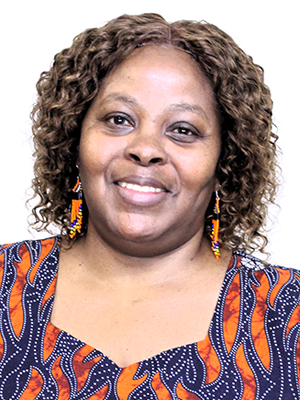
Prof Eunice Ivala
Scholarship of Teaching and Learning: Towards holistic student success...read more
Prof Eunice Ivala
Scholarship of Teaching and Learning: Towards holistic student success
The use of technology in teaching and learning is implemented differently in different contexts. In some contexts, academics are trained into how to appropriately infuse technology in teaching and learning, while in other contexts academics are left to navigate the use of technology in teaching and learning without training ( Theodorio, Waghid & Wambua,2024). In the latter context, self-directed learning plays a big role, where academics need to formulate professional development (learning) goals for themselves to effectively integrate technology in their teaching (Wittmann & Olivier, 2019). Furthermore, research into the impact of staff development in integrating technology in teaching and learning and the impact of use on students’ learning is not conducted to inform practice. For instance, one wonders how staff members address the elements of the Community of Inquiry framework proposed by Fiock (2020), namely cognitive presence, social presence and teaching presence to ensure meaningful online experiences for students. This is partly because, globally, not every scholar accepts that scholarship of teaching and learning (scholarship of teaching) is research ( Gilstrap et al., 2023) and as a result, research, which could lead to improved teaching and learning and student success is undermined and not carried out. I add to this debate in this lecture, and I argue that all types of scholarships are research. I demonstrate how my over 90 research outputs, some published in Q1 and Q2 journal and by reputable publishers such as Routledge, Taylor and Francis were conceptualized, and how they have contributed to access to knowledge for both academics and students, advanced educational and technology acceptance theories, developed frameworks and resources for ensuring good capacity development to academics and equal access to knowledge for all students.