|
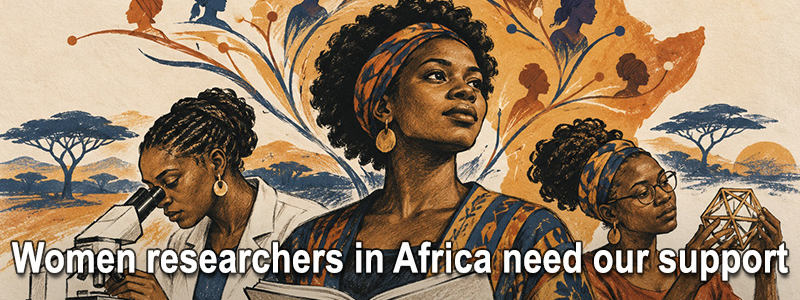
A frica can no longer afford to underutilise women's research potential. I have always hoped to see the day when this conversation would belong to the past, rather than one we would still be having in 2026.
But, sadly, we are. Although the NWU is making effort to address this issue with firm resolve, the same cannot be said for much of African institutions. Of our 50 324 contact students, 30 915 are female.
In 2003, the NWU delivered 1 788 female postgraduate graduates, 1 958 in 2024 and 2 052 in 2025.
This reflects progress in overcoming the exclusion of the past, although female student enrolment does not establish equality among researchers. South Africa can be proud of most of its public universities that are doing the same.
However, South Africa is only one of Africa's 54 UN member countries, and according to uniRank's 2026 directory, Africa has 1 332 listed, officially recognised higher education institutions.
The institutions exist, but the question remains; how well are they supporting the development of women researchers?
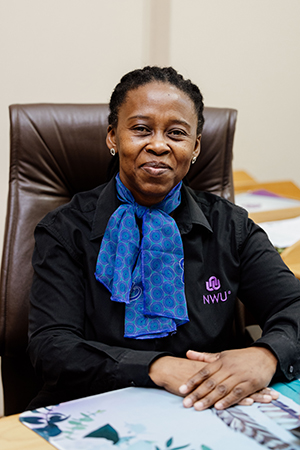 Prof. Nnenesi Kgabi, chief director for research and postgraduate support According to the UNESCO Institute for Statistics' February 2025 data release, women accounted for only 33,4% of researchers in sub-Saharan Africa in 2022 and 43,2% in Northern Africa. The two African regions therefore remained below equal representation. Supporting more women through research funding, mentoring, fair promotion and working conditions that accommodate caring responsibilities would help expand Africa's research workforce.
As UNESCO's call to close the gender gap in science explains, unequal participation limits the diversity of research ideas, introduces bias and risks overlooking perspectives needed to address global challenges. For Africa, supporting women in research means strengthening the knowledge and skills available to tackle its development needs, and providing platforms for growth and leadership in research programmes.
Furthermore, Africa needs greater representation of women researchers in highly technical fields, particularly in the development of technologies and innovations. In my experience, women's research often focuses on social issues, and I do not question the importance of that work.
However, we also need more women who are hands-on in developing technologies and producing innovative solutions that can be commercialised.
I want to encourage senior and established researchers at institutions across our continent to support women beyond the completion of their PhDs. We need to guide them through the process of identifying inventions, submitting invention disclosures and securing patents that can lead to commercial applications.
We should also help women examine their existing research to identify opportunities for further development. Many have produced substantial bodies of work but need guidance and support to recognise which findings could be developed into practical innovations.
That is a start, but we need more. These are the first steps in a marathon we must run. As a research community, we need to ask, without fear of the answers: what must we do, as a continent, to ensure that the unique perspectives women researchers bring to African research are not ignored or lost?
Then we need to act with purpose. Across Africa, universities must fund women's research fairly, support their progression into research and innovation leadership and ensure that senior researchers mentor them beyond their PhDs, helping to turn their findings into technologies, policies and practical solutions to our continent's water, energy, food, healthcare and economic challenges.
We must hold our institutions accountable for creating these opportunities so that women's perspectives help shape Africa's future and the need to fight for their inclusion finally become a conversation of the past.
|


 Research@NWU October 2026