|
W hen Leetile Disang Raditladi wrote his poetry in Setswana around 1936 when many African writers chose English, he set in motion a legacy that continues to spark debate about language, culture and identity.
His work is now the subject of a book that was recently reviewed by indigenous languages expert at the NWU's Indigenous Language Media in Africa research focus area, Prof Gilbert Motsaathebe.
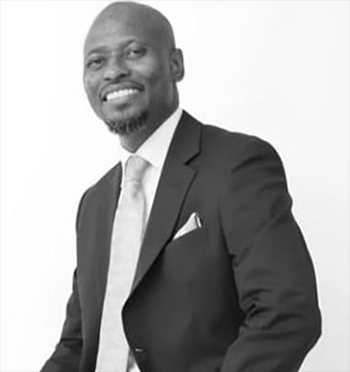 Prof Gilbert Motsaathebe
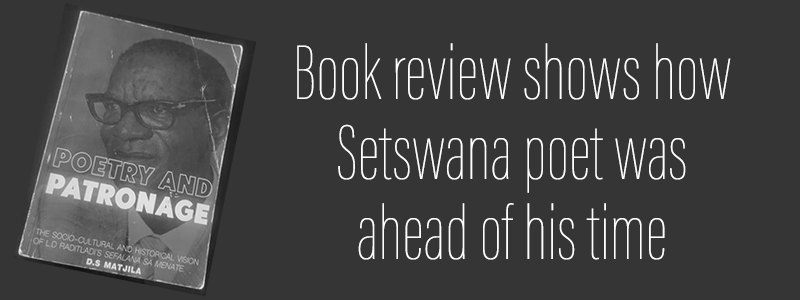
The book is titled Poetry and Patronage: The Socio-cultural and Historical Vision of Raditladi's 'Sefalana sa Monate' (2018) and was written by Prof Sekepe Matjila, the Head of the Setswana language unit at UNISA.
"This book thrives in making an insightful contribution to an important area that is largely neglected despite its significance," says Prof Motsaathebe.
His review was published in May 2025 in the International Journal of Indigenous Language Media and Discourse.
In his review, Prof Motsaathebe explains that the book provides a critical study of Raditladi's contribution to Setswana literature and to the broader Batswana community spread across Botswana, South Africa, Namibia and Zimbabwe. The review shows how Raditladi's poetry explored themes of cultural hybridity, the encounter between African and Western traditions, and the social changes facing the Batswana during his time.
Prof Motsaathebe observes that the work highlights Raditladi's decision to write in Setswana rather than English, situating him within ongoing debates on the role of indigenous languages in literature.
He notes that the book offers perspectives that extend beyond literary analysis by including historical accounts and reflections on patronage relations between Raditladi and chiefs in Botswana.
"To the best of my knowledge, it is the first such elaborate contribution to look at an early African writer using a multi-perspective approach."
The review positions Matjila's book as a resource for African language practitioners, educators, students and researchers, while also reconnecting contemporary readers to a writer whose work engaged with questions of identity, culture and society that remain significant today.
| 


 Research@NWU November 2025